

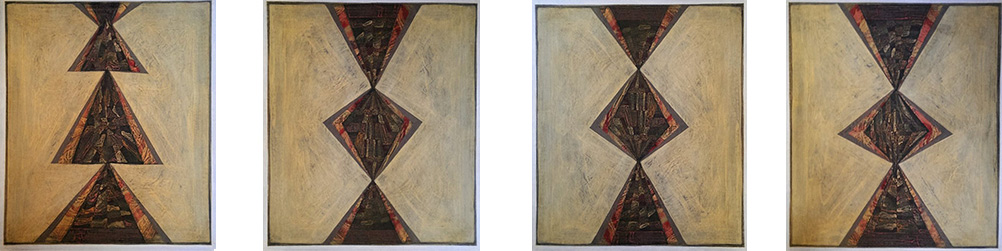
Doriano Vianello was born in Precenicco (UD) in 1952.
Versatile and multi-talented artist. Expressing creativity through painting, sculpture, graphics, music and more.
He gained his education using multiple experiences and skimmings continue to come to gain mastery in the field of traditional and experimental techniques.
Numerous solo and group exhibitions in which he participated both nationally and internationally, gaining respect and recognition from critics and audiences.
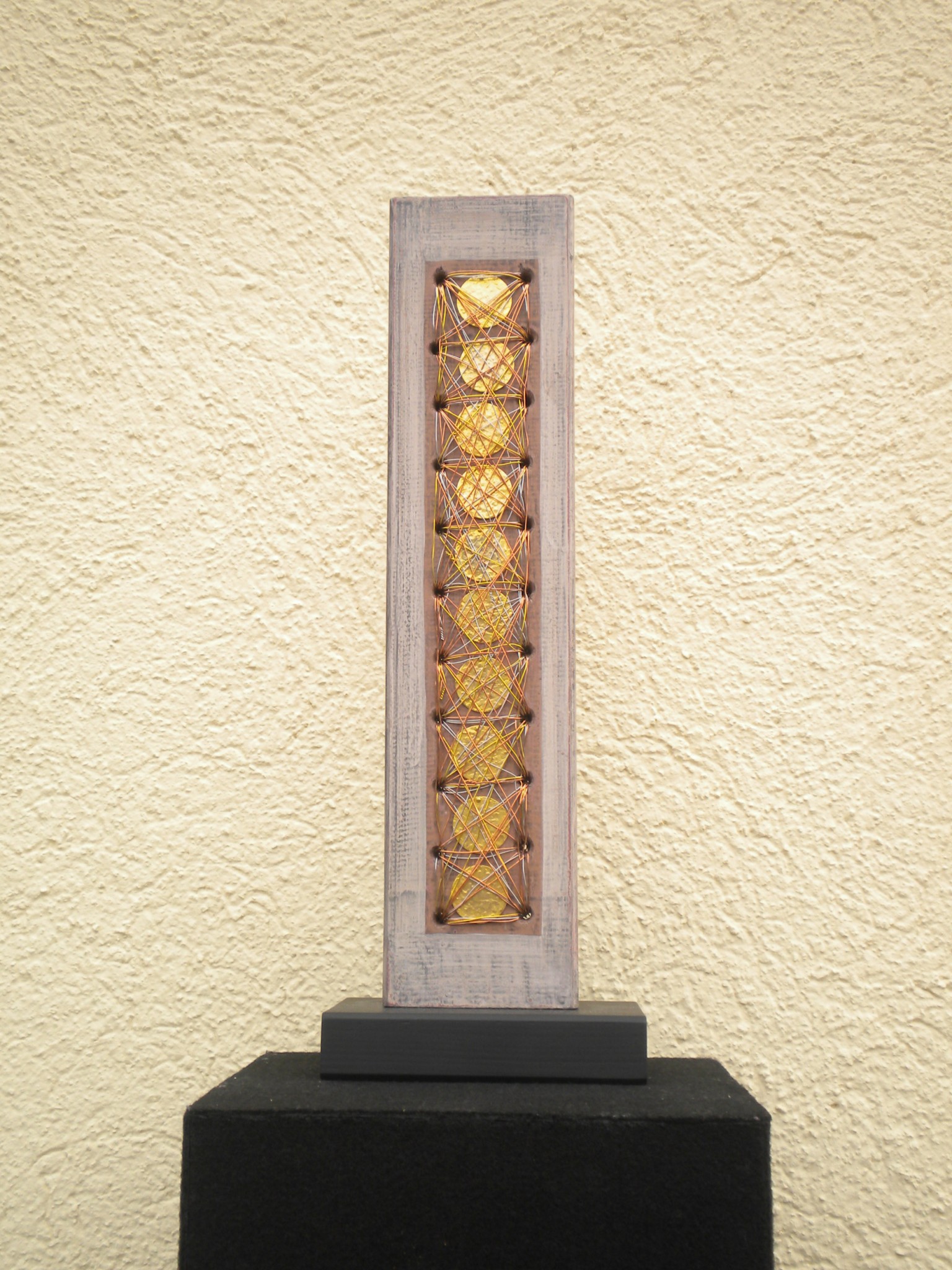 INTERACTIVE GEOMETRIES
The consistency of the artistical production of Doriano Vianello in the contents and in the stylistic formula that even if in costant evolvment, remains however of his connotatives, collide instead with the complexity in the reading of his works, placed on a constant plain of dichotomy in a contact zone of the opposites. In this artist relives the actual labour of contemporary art, also the Italian one, between analytical reflections and the exploration of the perceptive threshold. Infact, Vianello applies a deep reflection on the structure of the pictorial language, on the foundation of a communication through painting and sculpture both deprived of a context of true significancy. The being of the subject in the world as functionality and therefore recognizability come to cease up to sublime completion. To the point that sculpture can host painting and painting appear sculpture.
We are in a metalanguage. Equal level, Vianello works on perceptive material. The movements of his interactive geometry, the repetitveness of the signs in the work, the whispered presence of the colour operate with a visible answer often cheated by a non existent spatiality. Here, another interpretative bifurcation of Vianello: space and surface. The artist brings space to its uselessness, he zeros it, it is no longer needed because it has not a thing that can place. In this way infinity is rendered and therefore the unknownableness what happens doesn’t have a place to happen. In the work of Vianello there are no places, but even the surfaces, intended as support disappear. The perimeter of the frame doesn’t delimit and the canvas or the cardboard are no longer individuable. The surface sinks in layers, one after the other, one on top of the other but do not acquire materiality. It picks up pluralicity of comunication without change, similar to a photogram of a film in which the protagonists and places remain fixed, caught and blocked at the moment on a piece of polyester film. Material doesn’t exist not even colour: the spreading of it is such that becomes intangible, like its nature, nothing other than vibration in our mind. A veil that Vianello uses to paint his thoughts. On the other hand, how could he otherwise transfert his intimacy in an euclidian form? Time cancels at the internal of the psyche, the evens settle for emotional affinity for symbolic value, not for rythm of happening. This way they remain. They follow an apparent firmness that find contrast in the dynamisum of the forms, they appear a proper incoherent of the unconscious that instead follow the rational projectuality. Doriano Vianello locks for us and ignores us he reveals himself and hides, he uses the rules of aesthetics to then be cryptic with an antinomycale plurality that enchants and confuses and that is pecularity of an artist who is mature and intelligent brave and not banal far in this from that fastness and from the weak thougt that distinguishes a good part of our contemporary culture.
Fabio Favretto
 THE PHISICAL ABSTRACT OF DORIANO VIANELLO
In the act of approach to the art works of Doriano Vianello, on the limitation of the doorstep to his art, a light sheet with a sphinxlike request around the depth of the soul. The so unusual question remains hanging, to access to the artist, it resends the answer to his paintings: there is no thickness in the psycho. The thoughts and the memories, the most hidden privacy are forms and colours but not substance. They overlap in layers percolating in the unconscious transparently through unthreading of a bodiless temporal material, emerging between fluctuations of nothingness. To the touch, the paintings of Vianello do not have consistence nor volume. They appear holograms achieved through a refined technology when instead, they deal only of a big and highly developed picturesque technique. The mechanic of the perception, therefore, remains almost dazed in the deception of this genuine style and therefore remains no other solution than reclining in the acceptance of an impossible reality. They open like this and only in this condition of abandonment, the doors of intuitive comprehension and the most absolute participation to the emotive strain expressed by Vianello in his uninterrupted narrate of himself with the language of analytical abstraction. The colour is free from any descriptive dependency and talks in infinite chromatic variations; the form is framed on the outside in antithesis to all the dyes that are enclosed and internal for “nuance” and therefore seems once a breach once succession almost perspective of windows on the Es (unconscious). Entries to the intimate episodes or repeated up to becoming the determinant of a particular work of art in a tautological context almost hypnotic. The impact with the paintings of Doriano Vianello and with his graphics can not otherwise blend but on the participation. You must refrain to the temptation of making elegant objects of aesthetic pleasure. Main, instead, questioning yourself rather on wanted flatness of the colours, on certain hardly notable lines, grills and undulations that run through the works of Vianello. We can scrutinize the infinity of the patterns, to the threads of a thought that, almost brutal in sincerity, but never violent in the proposal, are extended on the canvas. Vianello has the great merit of being, in the past 40 years coherent with himself, released of academic obligations and references. His painting is direct, individualist up to an artistic anarchism, free from compromise to please others. If Vianello describes his own being and therefore not permitted to give up his spirituality, and not doing so, he is considered among the most genuine and interesting contemporary artists. His expressive strength, in balance between automatism and project, is not betrayed neither in plastic works nor sculpture carved from wood or shaped on cement slide, coloured and transformed up to becoming multidimensional. The borders of reality, in sculpture as in painting and in graphic, are rarefied and this levity substantiates the artistic production of Doriano Vianello, so particular, so deep and confidential, so complete to advert such whisper of a vital, strongly romantic, breeze.
Fabio Favretto
 THE TEXTURE OF THE SPACE
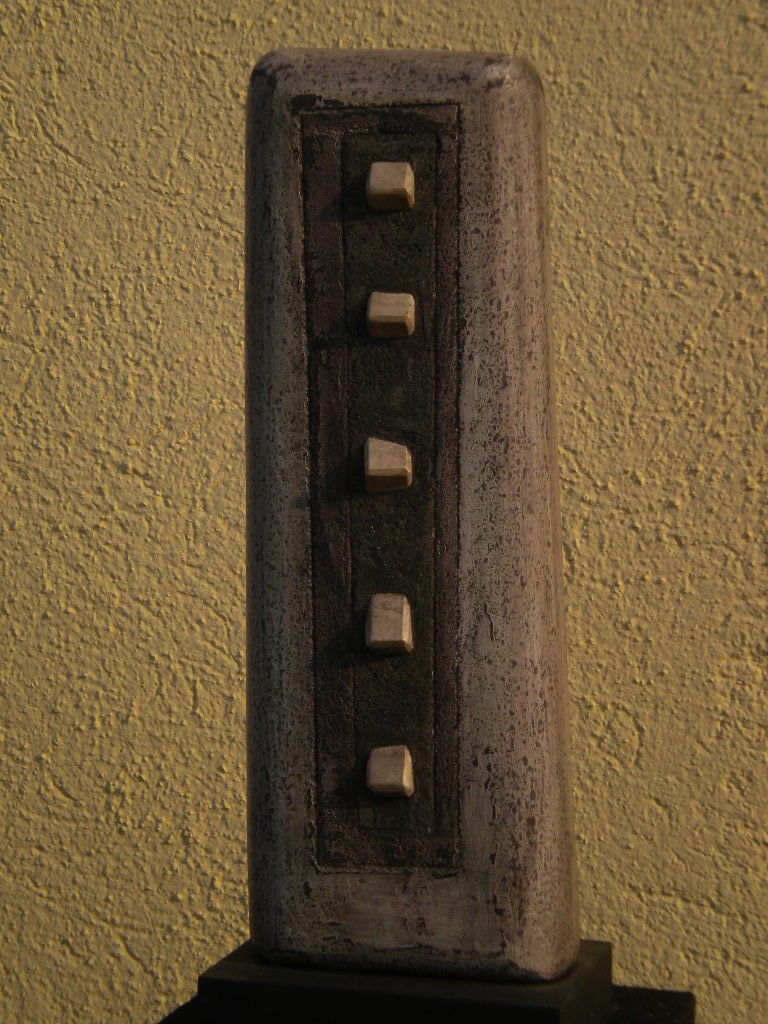
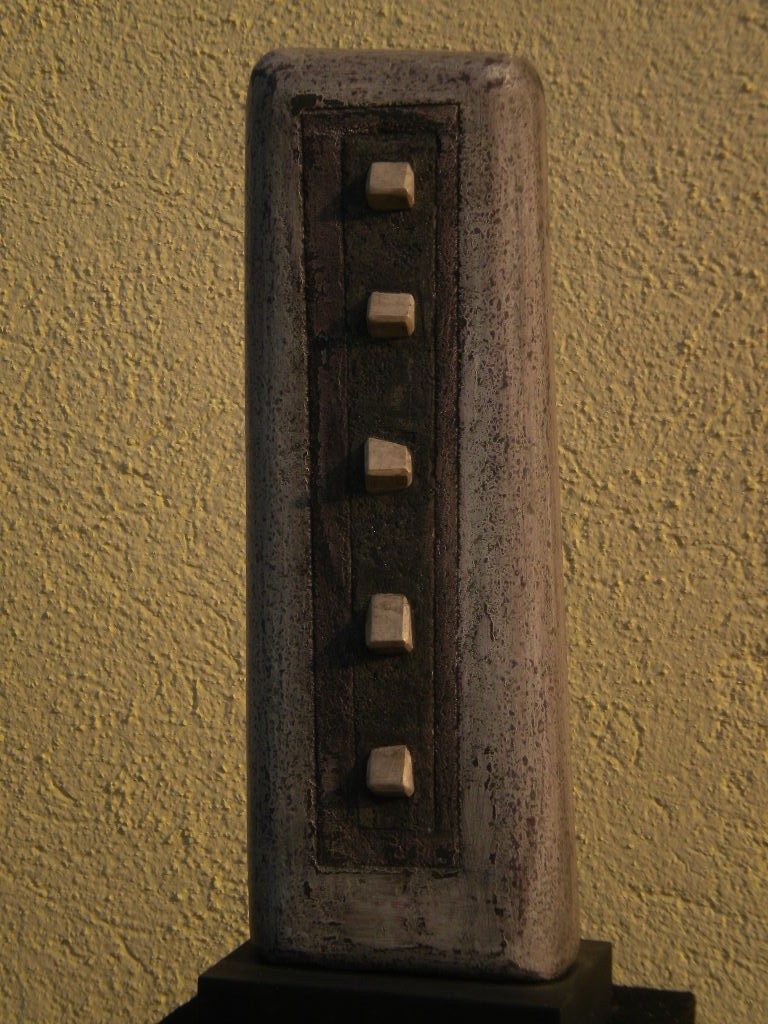
The fragmentation of the conscience, typical of the current time,dresses the artist and project him on the scene that in some measure is parallel to the reality of which reproduces and elaborates some bearing features. In his immaginary, semblances of the world are stacked, capable to assume figurative determination that than emerge every time the space of fantasy finds way to structure in a texture of corporeity almost a filigree visible of the existent, dispose to affirm such as, bu also the exhibit the effects of comparison between the sensible universe and the one only in thought. Doriano Vianello often draws to this repertoire, when he adverts the need translate his state of a soul in the fulfilment of his painting and sculptural works. The rhythm of the painted plan often present an inextricable tangle of the vibrations that go through it; the tendency of the abstractions is confirmed in a research which lands to a result of secure syntesis and of generous memory of the previous experiences. A burden of tremor, of slow impulses, characterize the painting made of countless presences, signed with serial, like ideograms of a language the relies on the colour and on the spatial texture its own significant reason. Some geometric elements flourish on the surface or on a three dimension to assume the aspect of a grill full of constitutive elements, where the logical of matching is a confirmed on the basis of a chromatic concept lighted for contrast or calmed by assonance. On the quality of the work coincide the refinement of the juxtapositions as embroideries of a plan built for rhythmic scanning, the rational order of score that fill a “screen” oriented towards a serial connotation. The homogeneous form of sign, wisely distributed on the surface, once vertically, once horizontally, create a compact maltitude, stringently structured, that for certain aspects go to the work of inlay and chasing, to harmonious arabesques, to misterious writings engraved on stele. Doriano Vianello is a meditative painter for he adheres to the rational necessity (evident also in the strict score of the space and in the calculated distribution of the chromatic effects) that does not leave space of the casualness of the instinctive gesture; develops a poetic brim to the emphasis of humor that talk of ascending and descending tones in a scale of colour, always in order according to the criteria of gradualness and cadenced by succession of tints carefully orchestrated. There is, in the works of this artist the idea of painting that is born from a nucleus generator and than, by proliferation of track, amplifies repeating endlessly that form up to the achievement of a textile; this by itself manages to weave space, variegating in a chromatic research uprising of colours that create a possibility of multiple reading. Small geometrical figures, multiplied up to the impobable, living a sense of thythm that continues ideally even over the phisical perimeter of the painting, triggering with the environment a play of postponement assigned to the fantasy of the observant. In the most recent phase of this research, Doriano Vianello aims to the achievement of a synthesis that can perforate certain baroque strains of the previous experiences; in such way simplifies the painted surface getting closer sometimes to an allusiveness figurative; thrown from a clear background left free by the artist to give emphasis to the formal reference. Sculpture deserves a separate speech, that on its surface reproduces patterns and tendency of the painting: it is the case of the stele, where the harmony of sense gives life to totemic situations, complerely released from a repesentative function and places instead with the finality to simulate a sort of interactive intervention in the observant. Based on this, the works can, on the same base of what displayed, potentially transform in other more, along a process of relentless further, just like as if the were pieces of departure pf a puzzle that can have a multitude of combinatorial solutions.
Enzo Santese